Sir Jim Ratcliffe became a non-UK resident in 2020. Once someone is non-resident under the Statutory Residence Test, the UK can only tax their UK-source income. Monaco charges no personal income tax, no capital gains tax and no wealth tax, so income flowing to him from INEOS’s offshore holding structure is outside UK tax entirely. The widely quoted £4 billion saving was the top end of a Sunday Times estimate covering three shareholders, and it was never confirmed.
The plan nobody wanted reported
Ratcliffe founded INEOS: chemicals, petrochemicals, cycling, Formula One and now Manchester United. He was born in Failsworth near Oldham, went to state school, took a chemistry degree at Birmingham and built one of the largest private companies in the world. A very British story, until 2018.
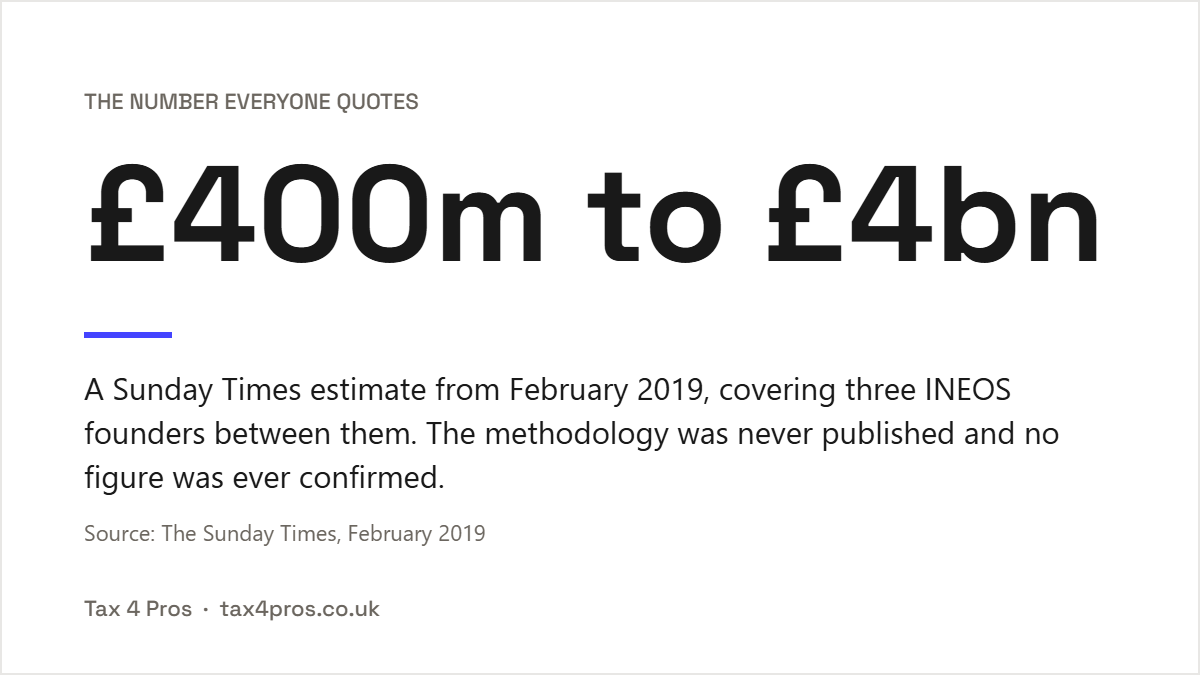
The Sunday Times broke the story in February 2019. Ratcliffe and his two co-founders, Andy Currie and John Reece, were working with PwC on a relocation plan. The estimate at the time was that the three of them, between them, could shelter somewhere between £400 million and £4 billion from UK tax. That is a range covering three people, a potential future saving, with a methodology that was never published. The £4 billion everyone quotes is the top end of an estimate, and it should always be labelled as one.
What happened next is the telling part. INEOS asked PwC’s auditors to publicly confirm that Ratcliffe was not a Monaco resident. PwC had seen his SEC filing, which listed his principal business address as the Le Splendido apartment block in Monaco, and refused. INEOS pushed. PwC resigned as auditor. When your auditor quits rather than sign off your boss’s address, the plan is already out. Official confirmation of the move came in September 2020.
How it actually works
The mechanism is not complicated, and it is regularly misreported.
Ratcliffe became non-UK resident. That is a different thing from non-domiciled, and the press confuses the two constantly. A non-dom was a UK resident claiming a foreign domicile, which historically sheltered foreign income they kept offshore. That regime was abolished from 6 April 2025. Non-residency means you actually leave. You satisfy the Statutory Residence Test as a non-resident, and from that point the UK can only tax your UK-source income. Foreign dividends, offshore business income and gains on foreign assets fall outside UK tax.
Monaco then does the rest: no personal income tax for non-French nationals, no capital gains tax, no wealth tax. A Monaco resident receiving income from companies registered in the Isle of Man, Switzerland or Luxembourg, which describes INEOS across multiple entities, pays nothing on it. Legally.
INEOS itself is layered. The ultimate parent is Isle of Man registered. A Swiss holding company has been in place since 2010, when INEOS moved to Switzerland for six years and saved a reported £100 million a year in UK corporation tax before returning in 2015. The Swiss architecture did not disappear on the return, it simply gained a London office on top. Between 2016 and 2021, INEOS paid nearly £500 million in management fees to the three founders, more than twice the company’s UK tax bill over the same period. None of that is illegal. That is structure.
The part HMRC can still reach
An honest account has to include this section, because the story is not finished.
When the move was planned, the open question was domicile. Under the old rules, inheritance tax followed domicile rather than residence, and tax lawyers said on the record that proving Ratcliffe had abandoned his English domicile of origin might be impossible, given his Hampshire estate, his public statements about being passionately British, and later his purchase of a stake in Manchester United.
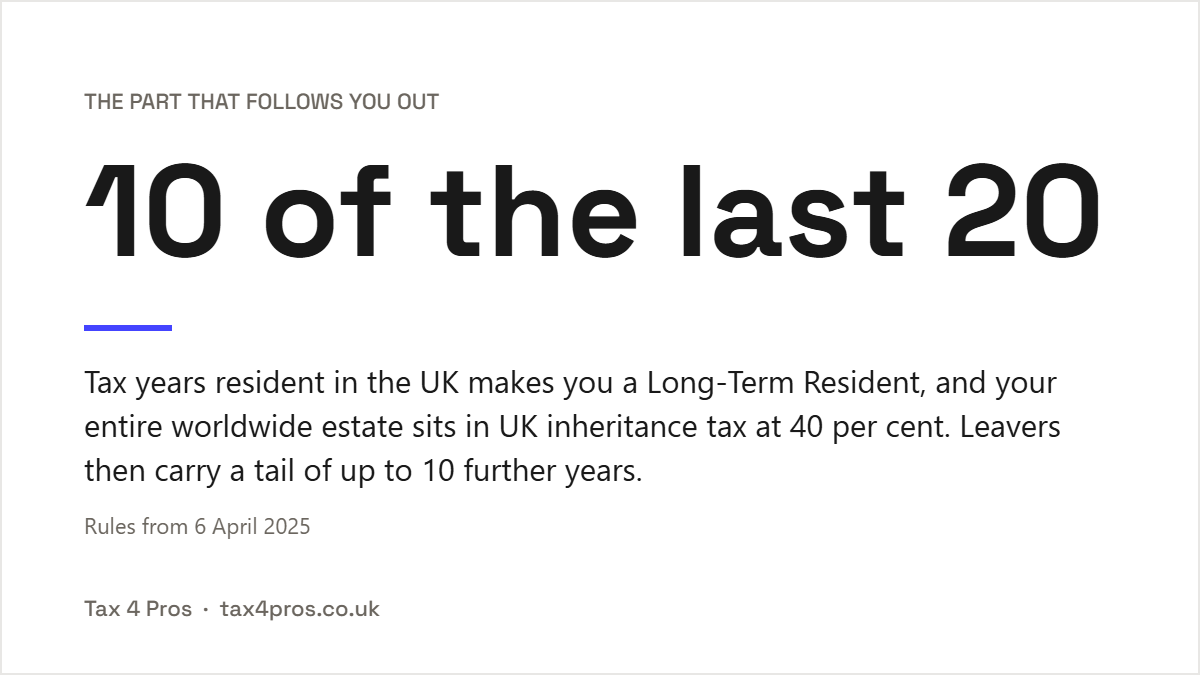
The law has since changed, and the new version arguably reaches further. From 6 April 2025, domicile was abolished for inheritance tax and replaced with a residence-based test. Anyone who was UK resident for at least 10 of the previous 20 tax years is a Long-Term Resident, with their entire worldwide estate in UK IHT scope at 40%. Leavers then carry a tail: after 20 or more years of UK residence, the worldwide estate stays in scope for a further 10 tax years of non-residence. On the public facts, Ratcliffe spent decades UK resident before 2020, which points to the maximum tail. Until enough non-resident years have accumulated, the 40% question stays live regardless of his Monaco address. There has been no confirmed HMRC challenge to his position, and HMRC does not comment on individual cases, but given the sums involved it is not a small open question.
The Manchester United complication
In December 2023 Ratcliffe agreed to buy just over a quarter of Manchester United for more than £1 billion, completing in early 2024. A Monaco resident can own a British football club, attend matches and run the sporting operations. What he cannot do, if he wants to stay non-resident, is exceed his day-count limit in any tax year.
The limit depends on how many UK ties he has. Under HMRC’s sufficient ties table for leavers, someone with two ties, for example available UK accommodation and regular UK work days, stays non-resident only if they spend no more than 90 days in the UK in the tax year. A third tie cuts that to 45. For someone actively involved in one of the Premier League’s biggest clubs, with a Hampshire property in the background, that is a tight and unforgiving window. One board meeting too many and the Statutory Residence Test catches the whole year.
What this means for a UK company director
You are not Jim Ratcliffe, but the principles scale down. The mechanism is structure decided before the income arrives, not after: where you are resident, which entity earns the income, and how and when you extract it.
For most directors the practical version is not Monaco. It is whether profit you do not need to spend is being extracted anyway and taxed personally, when it could be retained in the company and taxed once at corporation tax rates while it compounds. It is whether your group structure, intellectual property and extraction method fit the stage your business is at. Any comparison worth making is total tax on the same money under two routes with every layer counted, and every structure has conditions: genuine non-residence demands a genuinely changed life, retained profit is only cheap while it stays retained, and the IHT tail follows leavers for years. Ratcliffe’s advantage was advisers who structured early. The difference between his position and most directors is scale, not concept.
FAQ
Did Jim Ratcliffe really save £4 billion in tax?
Nobody knows. The Sunday Times estimated in February 2019 that the three INEOS founders together could save between £400 million and £4 billion over time. The methodology was never published and no confirmed figure exists. Ratcliffe owned about 62% of INEOS, so his share of any real saving would be the largest.
What is the difference between non-resident and non-dom?
A non-dom was a UK resident claiming a foreign domicile to shelter offshore income, a regime abolished from April 2025. A non-resident has actually left the UK under the Statutory Residence Test, after which the UK can only tax their UK-source income.
Can HMRC still tax someone who moves to Monaco?
On UK-source income, yes, always. And under the residence-based inheritance tax rules from April 2025, a long-term former resident’s worldwide estate can stay within UK IHT for up to 10 years after leaving. Leaving the income tax net is much faster than leaving the IHT net.
How many days can a leaver spend in the UK?
It depends on their ties. Under HMRC’s table for leavers, two ties allow up to 90 days, three ties up to 45, and four or more ties only 15. Fewer than 16 days in a tax year makes a recent leaver automatically non-resident.
Tax 4 Pros helps UK limited company directors get the structure right before the income arrives: the entity, the extraction method and the residence position, all legally and with every layer counted. Apply to work with us at apply.ctprivateoffice.com.
Sources
- Sunday Times, February 2019: the PwC relocation plan and the £400m to £4bn estimate
- Tortoise Media, “Lucky Jim”, February 2021: the PwC resignation, management fees of about £500m (2016 to 2021), the Swiss exile saving about £100m a year
- Bloomberg Tax and The Guardian, September 2020: confirmation of the Monaco move
- SEC filings and WikiCorporates: founder shareholdings (Ratcliffe about 61.8%)
- Sunday Times Rich List 2025: net worth estimate £17bn (down from £29.6bn in 2023)
- Garnham Family Office blog, March 2019: tax lawyers on the domicile question
- Finance Act 2025 and HMRC IHTM47020: the residence-based IHT regime and the leaver tail
- Manchester United stake: about 27.7% for about £1.25bn, announced December 2023, completed February 2024